
Nuclear War
Nonproliferation By Multilateral Talks, Not By Military Might, Must Be the Plan

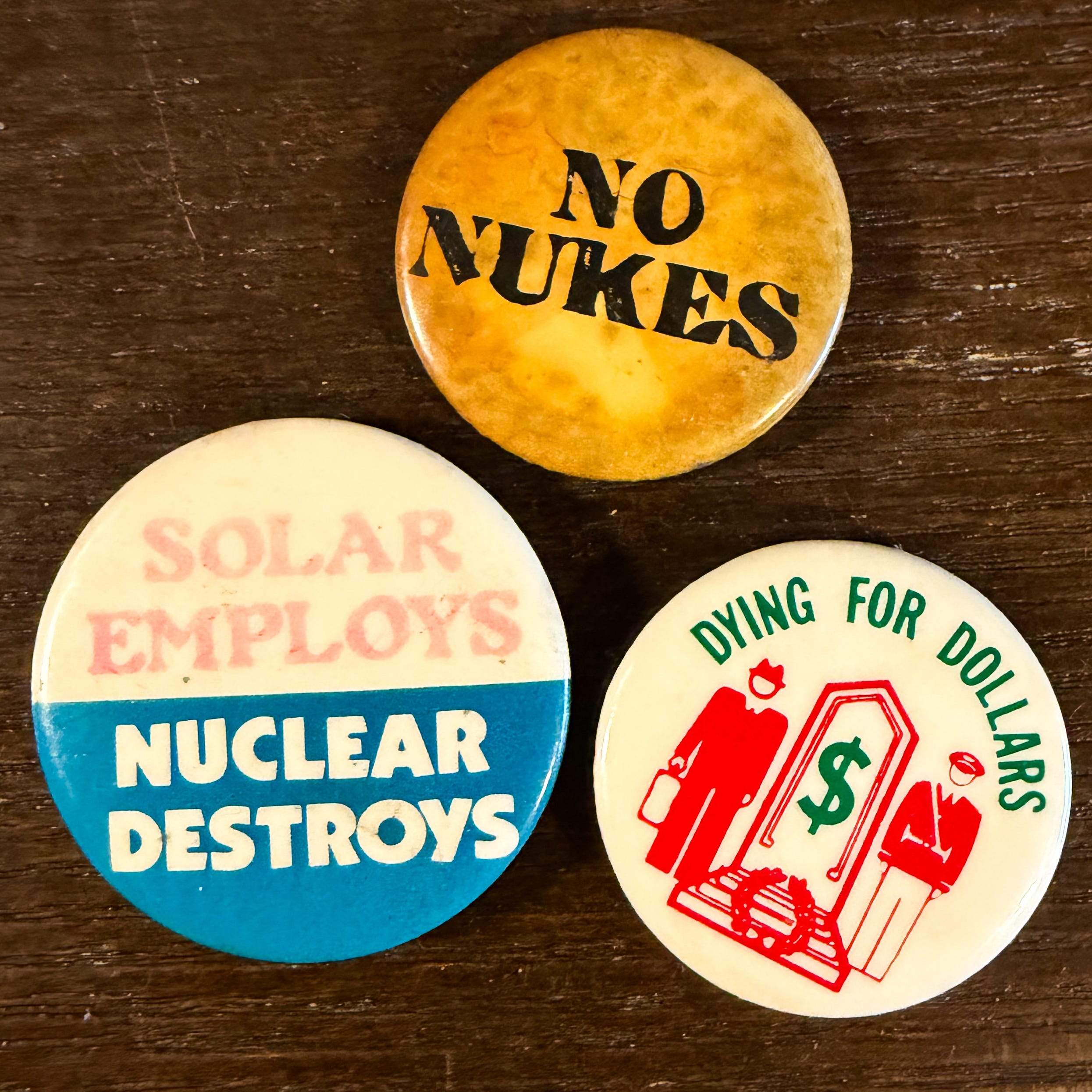
We continue to live in the shadow of the atomic bomb. Today marks 81 years since the first use of an atomic bomb as a weapon of war against Japan.
The United States dropped the first bomb on Hiroshima on Aug. 6, and followed with a second on Nagasaki three days later, killing an estimated 210,000, injuring and sickening hundreds of thousands more.
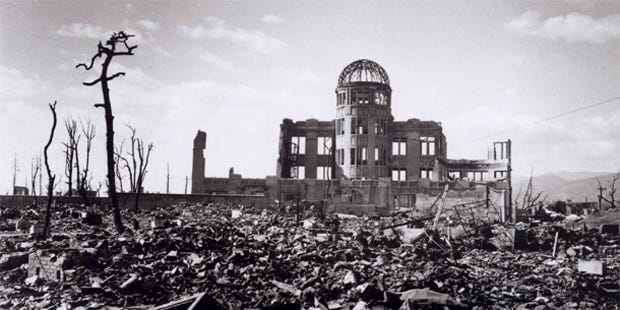
Most of us were taught that President harry Truman had little choice, that incinerating hundreds of thousands of Japanese was preferable to a U.S. ground invasion and casualties. Historical research tells a more complicated tale, though American institutions have long sought to censor critical takes on the bomb.1
“The basic argument in support of this view is a familiar one,” Nathan J. Robinson wrote in 2016.2
The bombings, defenders say, precipitated the Japanese surrender and ended the war. In doing so, they saved millions of lives, both American and Japanese, that would have been lost over the course of an impending American land invasion of Japan. Those who are horrified by the casualties of Hiroshima and Nagasaki are therefore putting unreasoning sentiment above practical necessity. The only moral choice was to drop the bombs, since they ultimately saved lives.
The argument is based on a counter-factual — an assumption that cannot be proven. “(T)he historical debate has not reached a clear resolution,” he writes, adding later in his piece that “the extreme confidence of the bombings’ defenders is both unwarranted and disturbing.”
I don’t want to relitigate this, though it does present us with as clear an example of unthinking American exceptionalism (and anti-Asian racism) as one might come across. In reality, the narrative is far more complex than most wish to admit. What strikes me is how much we have internalized this, how little we care to consider the debate, and just how much we have acclimated ourselves to the reality that there are more than 12,000 nuclear warheads stockpiled by nine nations, the bulk of them held by the United States and Russia. We go on with our lives rarely mentioning or even acknowledging the dangers posed by real nuclear proliferation, even as the International Committee to Abolish Nuclear Weapons warns
A single nuclear warhead could kill hundreds of thousands of people, with lasting and devastating humanitarian and environmental consequences. Detonating just 1 nuclear weapon alone over New York would cause an estimated 583,160 fatalities.
Nuclear weapons, however, color so much of our foreign policy — especially with regard to the Muslim nations and Israel. The justification for our war in Iraq was the fabrication that they were developing nukes. The same goes for our current offensive war on Iran, which President Donald Trump has deemed a defensive one.
Trump has repeatedly promised to hit Iran “really hard,” if they refuse to play ball — ignoring that it was Trump who ripped up a multi-party agreement on nukes that included the United States.
“If they back out again, they’re going to get hit really hard,” Trump told Fox News’ Trace Gallagher. “They know that. They understand that. I have no choice. They can’t have a nuclear weapon. It’s very simple.”
The current iteration of the war — we’ve been at war against Iran in various ways for early 50 years (some would say 75, when we removed an elected president in a CIA-backed coup) — has resulted in around 15,000 Iranian deaths and dozens if not hundreds of American military deaths. It also has spilled into the wider region, with Iran forced to target American allies and Israel using the war as cover to expand its slaughter into Lebanon and Syria.
These are not nuclear wars, but they are wars with a nuclear rationale, waged by the only nation to have actually used nuclear weapons against another nation, and by the lone holder of nukes in the Middle East.

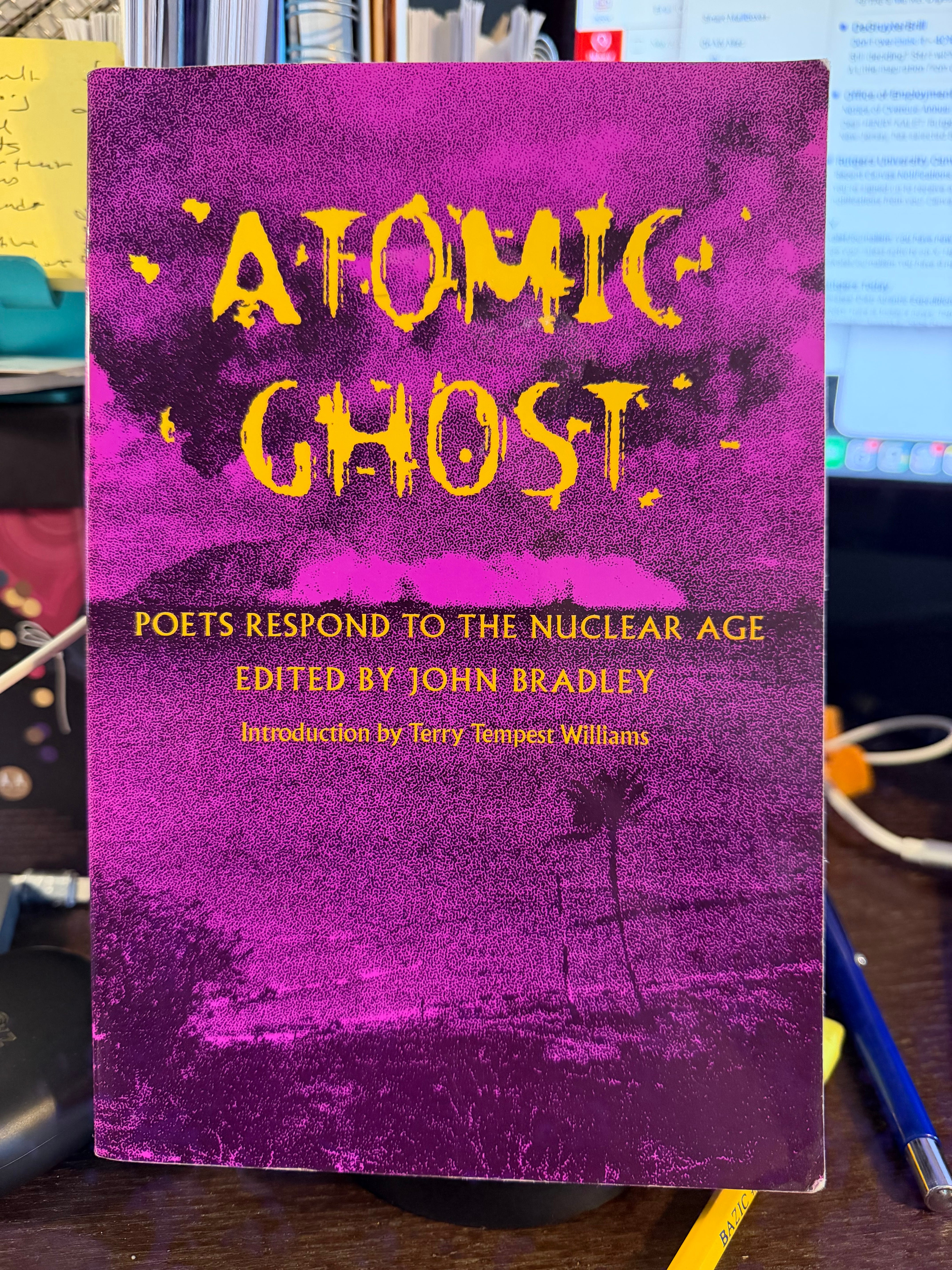
Essentially, we remain in the grip of nuclear fear but we’ve excised it from our culture. This was not always the case — up through the Regan presidency, a palpable fear played out in American and British music and other forms of culture. (See my essay.)
There are occasional songs that break through — P!nk’s “Never Gonna Not Dance Again” carries an apocalyptic vibe, and Cigarettes After Sex use apocalypse as metaphor, but these songs are increasingly rare, just as the shift from bomb-inspired films have been replaced by invasion stories.

I get where the the amnesia comes from, get that we have avoided nuclear war, but the weapons still exist, and we are once again letting them proliferate. Our response is what it always has been, to prevent others from having nukes, while demanding that we are the only party responsible enough to wield them safely — an ironic stance given the anniversary we are recognizing today.

Nathan J. Robinson. “How To Justify Hiroshima.” Current Affairs, 11 May 2016, https://www.currentaffairs.org/news/2016/05/how-to-justify-hiroshima. Accessed 6 August 2026