
Blood Libels
Contemporary Accusations are a Smokescreen Designed to Protect Power

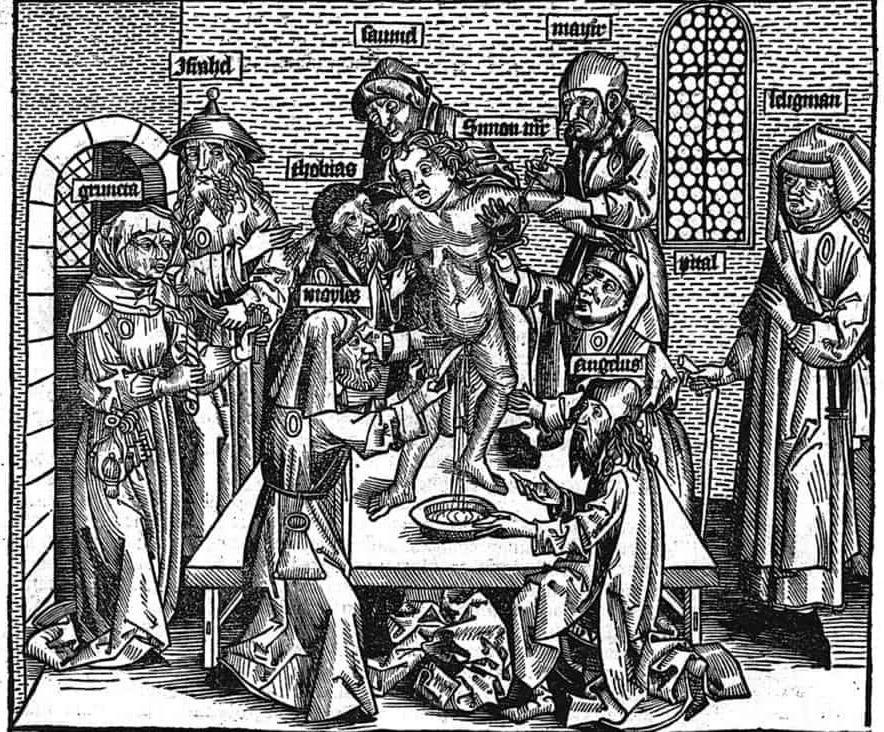
The phrase “blood libel” is back in the news, weaponized by defenders of Israel against The New York Times and their longtime columnist Nicholas Kristof.
Kristof’s May 11 column, “The Silence that Meets the Rape of Palestinians,” touched a raw nerve, destroying the lie that Israel’s supporters have been selling that the Israeli Defense Forces are somehow more moral than other militaries.
His column is based on multiple interviews with Palestinians who had been imprisoned by Israel, victims who “have recounted … a pattern of widespread Israeli sexual violence against men, women and even children — by soldiers, settlers, interrogators in the Shin Bet internal security agency and, above all, prison guards.”
What Kristof describes is not as unusual as it should be. Rape and sexual humiliation have been and continue to be weapons of war, used to break enemies, to undermine their sense of selves. They are inflicted both as a result of broad dehumanizing of supposed enemies, and a tool to enforce that dehumanization — by the Nazis and Russians in World War II, the Americans in Vietnam and later in Iraq (see the Abu Ghraib scandal), the Serbs duringn the break up of Yugoslavia, in Somalia, Rwanda, and so on.
Kristof describes the assaults in uncomfortable detail, making a point of saying it is unclear at this point who is responsible, though heh also questions why Israel’s leaders refuse to step in. Much of the column focuses on the use of objects — which echo the New York City Police rape of Abner Louima in the late-‘90s (he mentions this to show how prosecution can stem the practice) — but he also says dogs were used.


Enter Israel’s defenders. Mike Huckabee, the U.S. ambassador to Israel, has used the term “blood libel” to describe Kristof’s column, not to question what Kristof reports but to broadly justify Israeli actions by once again raising the specter of Oct. 7, 2023, and essentially saying that allowed any and all responses.
The musician Peter Himmelman has made the same argument — as a toss-off line in a blog post (repeated in the headline) designed to discredit The New York Times and its coverage of the genocide being waged by Israel.
The implication is that accusing Israeli soldiers of sexual violence against prisoners is similar to accusations leveled against Jews historically. It is not and to understand why, we have to consider what the phrase “blood libel” means. The term, according to the Holocaust Encyclopedia, “refers to the false allegation that Jews used the blood of non-Jewish, usually Christian children, for ritual purposes.” To bake matzo, or to engage in other allegedly nefarious, anti-Christian acts. This connection between Christianity and the “blood libel” is central to its repeated use in history against the Jews.
Christianity, in this case, is not just a religious movement. It was a political one, coopted by power elites to control large populations and push them toward conquest. Monarchs claimed a divine right to rule, as did the early popes, who used their “religious” authority to create a fighting church, a militarized church, that was then wielded during the Crusades against Jews and Muslims in the Levant (though the popes would eventually condemn the violence against Jews and the lie that often triggered it).
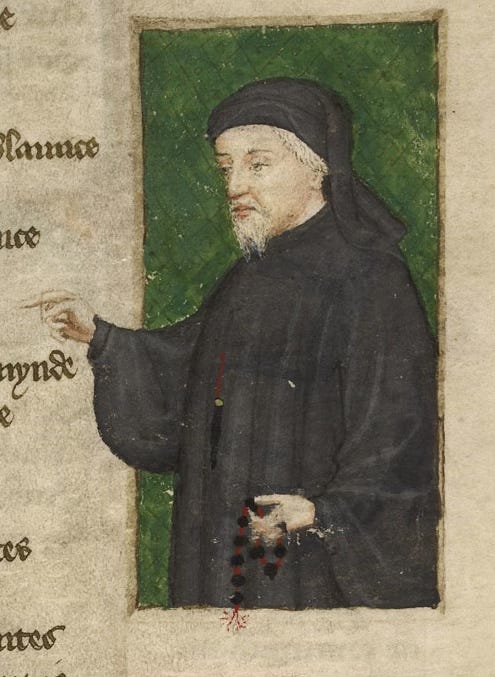
The “blood libel” appears to grow from this system, though it is unclear when it was first leveled against Jews. Geoffrey Chaucer’s Canterbury Tales (which dates to the late 14th Century) includes “The Prioress’ Tale” — a tale recounted by a prioress, a nun, that is part of a genre that Harvard’s Geoffrey Chaucer Website calls the “miracle of the Virgin,” a kind of “devotional literature” in which the “figure of the Jew play(s) the part of the ‘boogie man.’”
William Wordsworth describes it as a tender tale, but one “set in a context of ‘fierce bigotry.’” It is “violently anti-semitic” and “rooted in the ancient and persistent myth of ‘blood libel,’ the story of Jews murdering Christian children.”
There are debates over whether the prioress should be viewed with skepticism—as a caricature — or as speaking for Chaucer. I don’t think that matters. What matters is what its inclusion shows about the culture of Chaucer’s time, and how ingrained and connected to power the “blood libel” was and remained for centuries across Christian Europe and into the Arab world, even as the church had officially turned away from it.
The “blood libel,” in this way, was essentnial not just to the violence and pogroms, but to the way that violence enforced anti-Jewish segregation (expulsion from England, the Russian Pale of Settlement, the Inquisition). It was never just about “Jew-hatred,” but about a systemic exclusion of Jews from society, violence, and power. It was about ensuring that Jews were and remained a vulnerable and despised minority.
Today, the “blood libel” accusation is being weaponized, used to prop up powerful institutions and nations (Israel) by disarming critical voices. There are real episodes of antisemitism, like direct attacks on synagogues, but there also is a disingenuous mass conflation of antni-Zionismm with antisemitism that inflates the numbers.
Hold up a sign that reads “From the River to the Sea, Palestine will be free” and you will be tagged as an antisemite, accused of making a threat agaisnt Jews. The phrase can be read numberous ways — as a call for a free and equal Israel-Palestine, as a statement of support for displaced Palestinians, and yes, as a threat, which is how the Israeli Settler Movement intends “from the river to the sea” as it presses for a Greater Israel that would swallow up significant territory in the region.
The “blood libel” accusation today is just the most extreme version of this conflation of Jews with Israel, and its use needs to be understood within the context of a power analysis. People like Huckabee, Israeli Prime Minister Benjamin Netanyahu and his cabinet, Jonathan Greenblatt and the ADL, Donald Trump and much of the new Republican establishment trot out the antisemitism accusationt whenever Israel faces criticism, with the “blood libel” reserved as a response when Israel is accused of wholesale and racist violence.

.jpeg)
Shaul Magid, author of The Necessity of exile, says these folks, these defenders of Israel, “are not really honest brokers, but firemen. In these moments, they are dispatched to the airwaves to put of the fires started by anti-Israel, and ostensibly, antisemitic actors.” In this case, Israel’s defenders combed through the column and have honed in their critiques on accusations that dogs were used in sexual assaults and that some of the sources were not approved by the pro-Israel crowd.
I can’t speak to whether Kristof’s reporting is accurate — though, his reputation as a reporter has generally been stellar. As Magid writes, the proper response should be to calll for a full investigation, to “trust but verify” or “distrust but verify,” but not to deny or ignore or proclaim the accusations as “blood libel.”
The purely “antisemitic ‘explanation’ of the world,” as Vuk Bačanović writes, “is not only morally repugnant, but analytically foolish and politically harmful: it does not expose the existing system—it rescues it.”
This flips the “blood libel” onto its head, lends protection to the powerful by insulating them from these awful accusations, especially as it concerns criticism of U.S. policy on Israel, our allegedly defensive wars in Iran and Lebanon, Israel’s policies of segregation and violence against Palestinians, its overt support for settler invasions of West Bank towns, and its genocide in Gaza.